A day with my AI chief of staff
Hello All, here’s the next new trick: a day with my AI chief of staff starts at 6:30 AM, before I do.
Last post was the org chart. This is what a normal day looks like.
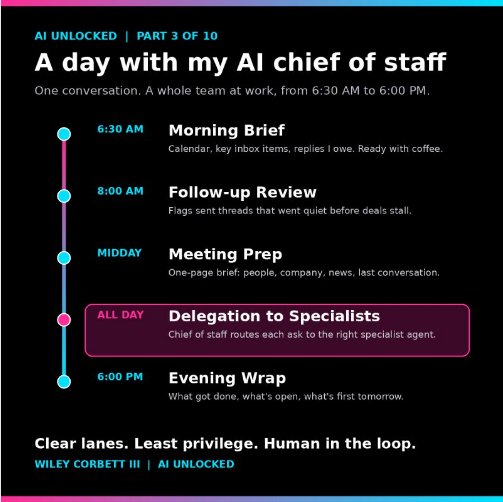
6:30 AM | Morning brief. My calendar, what matters in my inbox and who I owe a reply, all waiting for me. Five minutes with coffee instead of an hour of digging.
8:00 AM | Follow-up review. It goes through what I sent last week and flags the threads that went quiet, before they stall.
Midday | Meeting prep. Before a call I get a one-page brief on the people, their company, recent news and what we discussed last time. I walk in ready, not scrambling.
All day | Delegation. I ask for one thing and the chief of staff routes it to the right specialist. Everything comes back to one place.
6:00 PM | Evening wrap. What got done, what’s still open and what’s first tomorrow. I close the laptop with a plan.
The trick isn’t any one agent. It’s that I talk to one, and it gets the whole team working together.
What’s the first thing you’d hand off if you had a chief of staff tomorrow?
#AIUnlocked
Go deeper
Two of these moments make good first routines. The morning brief has a home version (your calendar, the emails that need you and what’s coming up) and a work version. The follow-up review is a good small business extra: it looks at what you sent and finds the threads that went quiet, then drafts follow-ups for you to review.
The kit’s advice is to run a routine once by hand, fix anything you don’t like, then save your version. When it works, Grok Bot can run it on a schedule. Ask it to make the routine run every weekday at 6:30 AM, and check that your time zone is set correctly.
Meeting prep fits the same pattern. The work version of the morning brief adds a short brief for your most important meeting of the day: who’s attending, what you last discussed and any open questions.
Keep the same rule I use: it drafts, you approve. A brief or a draft follow-up is preparation. Sending is still your call.
Get the weekly AI Unlocked notes.
New guides, agent templates, and tool updates, in plain English.
No spam, unsubscribe anytime. We’ll never sell your email or share it with advertisers. It’s used only by AI Unlocked to send these notes. Privacy policy.
Questions? wiley@mail.grokbot.com.