My AI Team: An AI Chief of Staff and the Specialists It Delegates To
Draft. Confirm against post text: expands AI Unlocked Post 2 (LinkedIn). Match the wording to the published post before publishing.
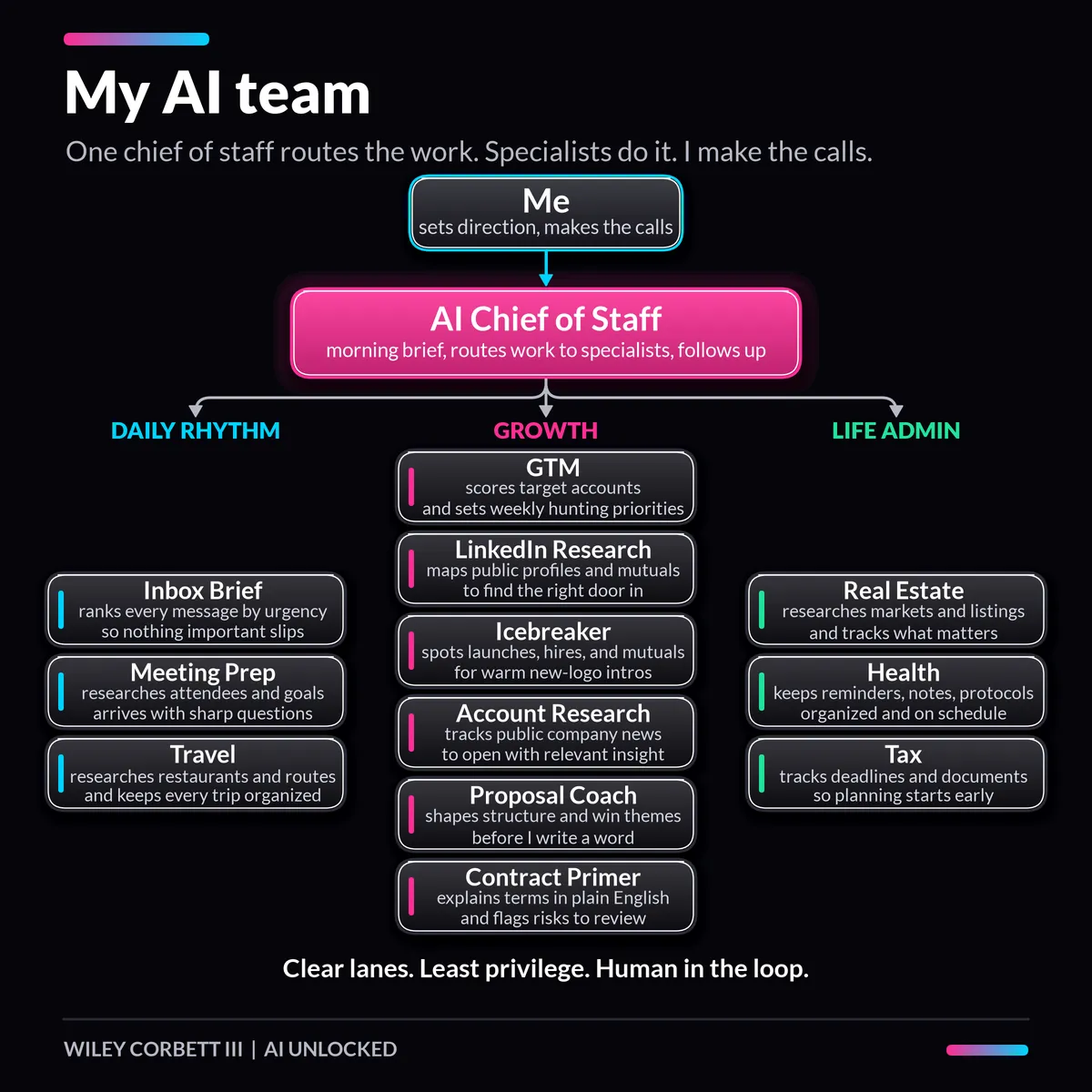
One chief of staff routes the work. Specialists do it. I make the calls.
The structure
Me. I set direction and make the decisions.
AI Chief of Staff. It writes the morning brief, routes work to specialists, and follows up. It is the only agent I talk to most days.
Daily rhythm
- Inbox Brief: ranks every message by urgency so nothing important slips.
- Meeting Prep: researches attendees and goals, and arrives with sharp questions.
- Travel: researches restaurants and routes and keeps every trip organized.
Growth
- GTM: scores target accounts and sets weekly hunting priorities.
- LinkedIn Research: maps public profiles and mutual connections to find the right way in.
- Icebreaker: spots launches, hires, and mutuals for warm intros to new logos.
- Account Research: tracks public company news so I open with a relevant insight.
- Proposal Coach: shapes structure and win themes before I write a word.
- Contract Primer: explains terms in plain English and flags risks for me to review.
Life admin
- Real Estate: researches markets and listings and tracks what matters.
- Health: keeps reminders, notes, and protocols organized and on schedule.
- Tax: tracks deadlines and documents so planning starts early.
The three rules
Clear lanes. Every specialist has one job and one set of instructions. When something goes wrong, I know which agent to fix.
Least privilege. I learned this managing Macs with Jamf. Each agent gets only the access its job needs. Research agents read public information. Only the chief of staff sees my calendar.
Human in the loop. Agents draft, research, and recommend. I approve anything that is sent, signed, bought, or posted.
How delegation actually works
In Grok Bot, Bots can message each other and hand off work, and a Bot can create other Bots. My chief of staff gets a request (“prep me for Thursday’s meeting with a new prospect”), sends Account Research and Meeting Prep their pieces, and returns one brief. Verify before publishing: confirm the current handoff UI in Grok Bot.
Build your own
Don’t start with thirteen agents. Start with one, then add the next only when you feel the need:
Try this as a ready-made Grok Bot template
- Executive Assistant: an EA and chief-of-staff Bot for exec support.
- GTM Account Research: researches one account before a meeting, deal review, or account plan.
- GTM Loop Closer: finds promises and follow-ups left behind in meetings, email, Slack, CRM, or task tools.
Templates are community and Grok Bot team Bots in the official Marketplace. Review a template’s plugins and instructions before adding it. Verify links before publishing.
FAQ
What is an AI chief of staff?
An AI agent whose job is coordination: it prepares your morning brief, routes requests to the right specialist agent, and follows up on open items. It doesn't do every task itself.
Why use specialists instead of one big agent?
Narrow agents get narrower permissions and clearer instructions. That makes them easier to test, easier to trust, and easier to fix when one goes wrong.
One email. Every week.
What changed, and how to use it.
New guides, agent templates, and tool updates, in plain English.
Placeholder form. Connect to Beehiiv before launch.